Small varicose veins may improve in appearance with treatments such as sclerotherapy, laser treatment, or other vein procedures. Compression, walking, and leg elevation can help symptoms, but they usually do not make faulty veins go away. The best way to get rid of small varicose veins depends on whether they are only surface veins or a sign of deeper venous reflux.
If you are searching for how to get rid of small varicose veins, you may be looking at a few blue or purple veins near the ankle, calf, or thigh. They may seem cosmetic at first. But small visible veins can sometimes be the surface sign of a deeper circulation problem.
At Vascular & Interventional Specialists of Alabama, vein care starts with understanding why the veins appeared. The treatment for tiny spider veins is not always the same as treatment for bulging varicose veins or venous reflux.
Why Small Varicose Veins Happen
Veins carry blood back to the heart. Tiny valves inside the veins help keep blood moving upward. When those valves weaken, blood can flow backward and pool. This raises pressure inside the vein.
Over time, that pressure can stretch veins. Some become small surface veins. Others become larger, rope-like varicose veins. The same pressure can also lead to swelling, aching, skin discoloration, and venous ulcers.
The client's venous disease page explains that venous reflux can lead to varicose veins, swelling, discomfort, and possible venous ulcers. That is why treatment should look at both appearance and symptoms.
Can Home Care Make Varicose Veins Go Away?
Home care can help symptoms. It may also slow worsening. But it usually will not erase varicose veins that are already stretched.
Helpful habits include walking, calf exercises, leg elevation, weight management, and wearing compression stockings if your provider recommends them. Mayo Clinic lists exercise, leg elevation, and compression stockings as self-care steps that may ease varicose vein pain and help keep veins from getting worse.[1]
If veins are mild and not painful, home care may be enough for a while. If veins hurt, swell, burn, itch, bleed, or keep spreading, an evaluation is worth it.
Varicose Vein Treatment Options Compared
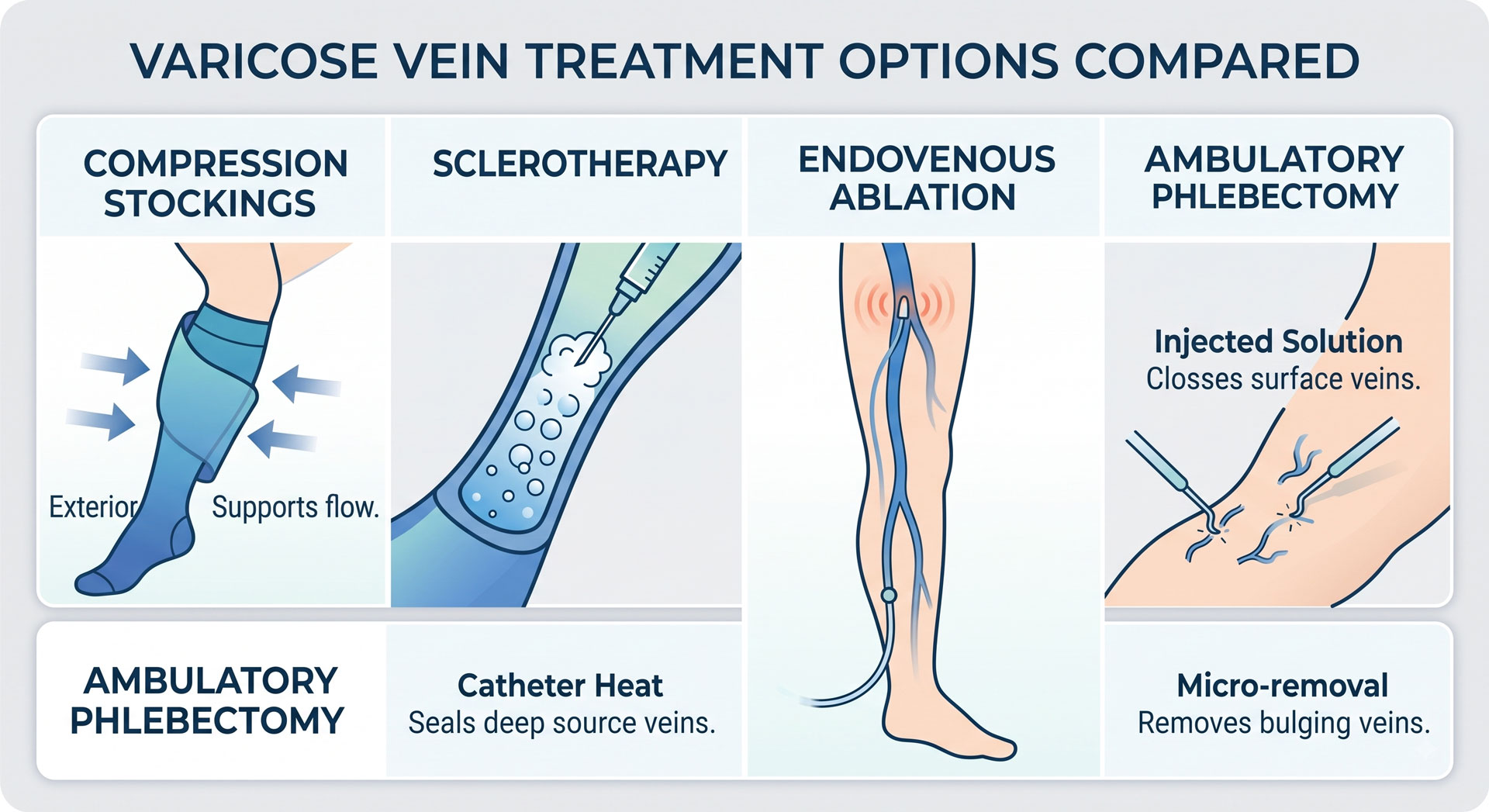
Different vein treatments solve different problems. The right option depends on vein size, vein depth, symptoms, ultrasound findings, and goals.
|
Treatment |
What It Treats |
How It Works |
Usual Recovery |
|
Compression |
Symptoms and swelling |
Supports blood flow from outside the leg |
Same day |
|
Sclerotherapy |
Small varicose or spider veins |
Injects a solution or foam to close the vein |
Usually quick |
|
Endovenous ablation |
Larger refluxing veins |
Uses heat from laser or radiofrequency to seal a faulty vein |
Often outpatient |
|
Ambulatory phlebectomy |
Bulging surface veins |
Removes veins through tiny skin punctures |
Often outpatient |
|
Vein stripping |
Select cases |
Surgical removal of a diseased vein |
Longer than newer options |
Mayo Clinic describes sclerotherapy, laser treatment, catheter-based radiofrequency or laser procedures, vein stripping, and ambulatory phlebectomy as options for varicose veins.[1]
What Is Sclerotherapy?
Sclerotherapy treatment uses a small needle to inject medicine into a vein. The treated vein scars closed. Over time, the body reroutes blood through healthier veins and the treated vein fades.
Sclerotherapy is often used for spider veins and small varicose veins. Foam sclerotherapy may be used for some veins that need a wider spread of medicine inside the vein. Ultrasound-guided sclerotherapy uses imaging so the specialist can see the vein while treating it.
People often search for sclerotherapy near me, sclerotherapy cost, or how much does sclerotherapy cost. Cost depends on the number of veins, number of sessions, whether ultrasound is needed, and whether the treatment is considered cosmetic or medically necessary.
Sclerotherapy vs Ablation
Sclerotherapy is often used for smaller veins. Endovenous ablation is often used for larger veins that have reflux.
During ablation, a thin catheter is placed inside the faulty vein. Heat from laser or radiofrequency energy closes the vein. Mayo Clinic notes that catheter-based procedures using radiofrequency or laser energy are often used for larger varicose veins.[1]
If an ultrasound shows a large refluxing vein feeding the smaller visible veins, treating only the surface veins may not last. The deeper source may need care first.
Ambulatory Phlebectomy and Vein Stripping
Ambulatory phlebectomy, also called microphlebectomy, removes bulging surface veins through tiny punctures. It can be helpful when veins are too large or raised for injection alone.
Vein stripping is an older surgical option. It is used less often now because many patients can be treated with less invasive methods. The Vascular & Interventional Specialists of Alabama venous disease page notes that vein stripping and ligation are rarely needed today because less invasive methods are widely available.
Small Veins May Be a Sign of a Bigger Vein Problem
Small varicose veins are not always small problems. If you also have heaviness, ankle swelling, night cramps, skin discoloration, or itching near the ankles, ask whether venous insufficiency is involved.
Vascular & Interventional Specialists of Alabama offers varicose vein and venous disease treatment, along with other minimally invasive procedures, in Birmingham and Pelham. You can also find their Pelham location on Google Maps.
Frequently Asked Questions
- What is the best way to remove small varicose veins? - For many small veins, sclerotherapy is a common option. The best choice depends on ultrasound findings and whether deeper reflux is present.
- Does sclerotherapy work? - Sclerotherapy can work well for selected small varicose veins and spider veins. Some veins need more than one session.
- Is sclerotherapy painful? - Most people feel small needle sticks, stinging, or mild cramping. Ask your clinic what to expect during and after treatment.
- Does insurance cover sclerotherapy? - It depends. Cosmetic treatment may not be covered. Treatment for symptoms or venous disease may need documentation and prior authorization.
- How do I sleep after varicose vein surgery or treatment? - Follow your provider's instructions. Many people are told to walk regularly, avoid long periods of stillness, and elevate the legs when resting.
Conclusion
The best way to get rid of small varicose veins starts with the right diagnosis. You may treat small veins with sclerotherapy, but deeper reflux may require ablation or another vein procedure first. If you are ready to compare your options, schedule a vein evaluation.
Medical Disclaimer: This article is for general education only. It is not a diagnosis or treatment plan. Varicose vein treatment should be based on a medical exam and, when needed, ultrasound testing.
References
[1] Mayo Clinic. Varicose veins: Diagnosis and treatment. https://www.mayoclinic.org/diseases-conditions/varicose-veins/diagnosis-treatment/drc-20350649
[2] Cleveland Clinic. Venous Disease Treatments. https://my.clevelandclinic.org/health/treatments/17613-venous-disease-treatments
[3] Cleveland Clinic. Chronic Venous Insufficiency. https://my.clevelandclinic.org/health/diseases/16872-chronic-venous-insufficiency-cvi
[4] Vascular & Interventional Specialists of Alabama. Venous Disease. https://www.vi