Plantar fasciitis embolization is a minimally invasive treatment being studied and used for chronic heel pain that has not improved with rest, stretching, shoe changes, therapy, injections, or other conservative care. During the procedure, an interventional radiologist guides a tiny catheter into small arteries near the heel and reduces abnormal blood flow linked with ongoing inflammation. It is not for every case of heel pain, but it may be an option for selected patients.
Heel pain can take over your day. It can make the first steps in the morning painful. It can make work, exercise, and errands harder than they should be.
Most plantar fasciitis improves without a procedure. But some people have pain for months despite stretching, shoe inserts, physical therapy, anti-inflammatory medicine, or injections. That is where plantar fasciitis embolization may come up.
At Vascular & Interventional Specialists of Alabama, plantar fascia embolization is described as a minimally invasive outpatient option for chronic heel pain when conservative care has not brought enough relief.
What Is Plantar Fasciitis?
The plantar fascia is a thick band of tissue on the bottom of the foot. It runs from the heel toward the toes and helps support the arch.
Plantar fasciitis happens when this tissue becomes irritated. The pain is often sharp near the heel. Many people feel it most when they first get out of bed or stand after sitting.
Heel pain is not always plantar fasciitis. Stress fractures, nerve irritation, Achilles tendon problems, arthritis, and fat pad pain can feel similar. A clear diagnosis matters before choosing treatment.
What Is Plantar Fasciitis Embolization?
Plantar fasciitis embolization (PFE) is also called embolization for plantar fasciitis or plantar fascia embolization, performed by an interventional radiologist.
The treatment targets abnormal small blood vessels near the irritated plantar fascia. These vessels may bring inflammatory cells to the area and keep pain going. The goal is to reduce abnormal blood flow so inflammation can calm.
This is an emerging treatment. That means research is growing, but it is not as established as stretching, orthotics, physical therapy, or other standard first-line care. Discuss it carefully during a consultation.
Who May Be a Candidate?
A person may ask about plantar fasciitis embolization treatment if heel pain has lasted for months and has not improved with conservative care.
Possible candidates often have:
- Chronic heel pain that limits walking, standing, work, or exercise
- A diagnosis of plantar fasciitis
- Symptoms that have not improved enough with non-surgical treatment
- Imaging or exam findings that support the diagnosis
- A wish to avoid open surgery when possible
A person may not be a good candidate if the pain is from another condition, if circulation to the foot is poor, or if medical risks make embolization unsafe. The decision depends on the exam, imaging, health history, and prior treatments.
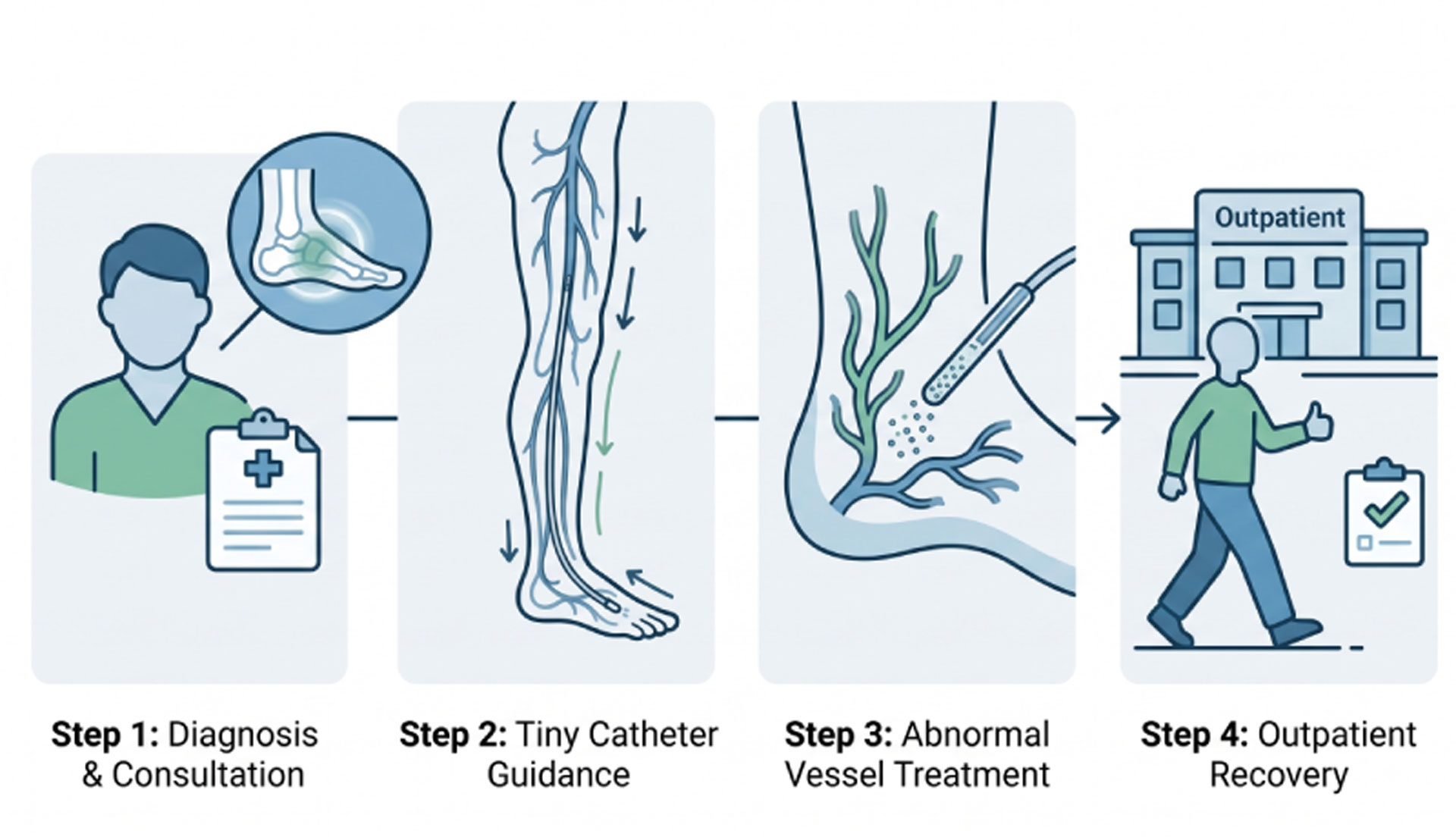
How the Plantar Fasciitis Embolization Procedure Works
Diagnosis comes first
A provider reviews symptoms, prior care, and imaging. This step helps confirm that the pain is truly coming from the plantar fascia.
A tiny catheter is guided into place.
During the plantar fasciitis embolization procedure, the interventional radiologist uses imaging guidance to move a small catheter through an artery toward the foot.
Abnormal vessels are treated.
Tiny particles or another embolic agent are placed to slow abnormal blood flow near the painful area. The goal is to reduce inflammation signals, not to cut off healthy circulation to the foot.
Recovery is usually outpatient.
Many PFE procedures are done without a hospital stay. Recovery instructions vary, so patients should ask when they can return to standing, walking, work, exercise, and supportive footwear.
What Does Research Say?
Current research is promising but still limited.
A PubMed-indexed study of 66 patients with plantar fasciitis that did not respond to conservative treatment reported no major adverse events and improved pain and foot function after intra-arterial embolization, with follow-up lasting up to 4 years in some patients.[1]
Another PubMed-indexed early outcomes study looked at transcatheter arterial embolization for plantar fasciitis that did not improve with conservative therapy.[2]
ClinicalTrials.gov also lists active studies looking at safety, feasibility, pain reduction, and foot function after plantar fascia embolization.[3]
These findings do not mean PFE is right for everyone. They do mean the treatment is being studied seriously and may have a role for carefully selected patients.
Plantar Fasciitis Embolization Cost
Plantar fasciitis embolization cost can vary. It may depend on the clinic, imaging needs, insurance plan, facility fees, and whether the payer considers the procedure medically necessary or investigational.
The best step is to ask the clinic to review benefits before the procedure. Ask what may be billed, what insurance may cover, and what out-of-pocket costs could apply.
Good questions include:
- Is PFE covered by my insurance plan?
- Do I need prior authorization?
- Are imaging and follow-up visits included?
- What happens if the treatment is not covered?
Risks and Limits to Discuss
Every procedure has risks. With PFE, patients should ask about bruising, bleeding, infection, artery injury, temporary discomfort, numbness, skin changes, allergic reaction to contrast, and the chance that pain does not improve enough.
The bigger risk may be treating the wrong problem. If heel pain comes from a stress fracture, nerve issue, or tendon problem, embolization may not help. That is why diagnosis comes first.
Heel Pain That Will Not Quit May Need a Different Approach
If heel pain is still limiting your life after months of conservative care, it may be time to ask about newer options. Vascular & Interventional Specialists of Alabama offers plantar fascia embolization for heel pain along with other minimally invasive procedures in Birmingham and Pelham. You can also find their Pelham office on Google Maps.
Frequently Asked Questions
- What is plantar fasciitis embolization? - It is a minimally invasive procedure that targets abnormal small blood vessels near the plantar fascia to reduce inflammation and chronic heel pain.
- Is embolization for plantar fasciitis surgery? - It is not open surgery. It is an image-guided catheter procedure performed through a small access site.
- Who is PFE for? - It may be considered for chronic plantar fasciitis that has not improved with conservative treatment. A consultation is needed to confirm candidacy.
- How much does plantar fasciitis embolization cost? - Cost varies by insurance, facility, imaging needs, and coverage rules. Ask for a benefits review before scheduling.
- How soon can I walk after the procedure? - Instructions vary. Ask your treating team when you can return to normal walking, work, exercise, and supportive shoes.
Conclusion
Plantar fasciitis embolization may offer another path for people with stubborn heel pain. It is not a first step for mild pain, and it is not right for every patient. But if months of conservative care have not helped enough, schedule a heel pain consultation to ask whether PFE may fit your case.
Medical Disclaimer: This article is for general education only. It is not a diagnosis or treatment plan. Heel pain can come from several causes. Talk with a qualified healthcare professional before deciding whether plantar fascia embolization or any other procedure is right for you.
References
[1] Sasaki T, et al. Clinical results of ultrasound-guided intra-arterial embolization targeting abnormal neovessels for plantar fasciitis. PubMed. https://pubmed.ncbi.nlm.nih.gov/39089905/
[2] Gandhi R, Banker M. Early outcomes of transcatheter arterial embolization using imipenem/cilastatin for plantar fasciitis refractory to conservative therapy. PubMed. https://pubmed.ncbi.nlm.nih.gov/38281074/
[3] ClinicalTrials.gov. Embolization for the Treatment of Heel Pain Secondary to Plantar Fasciitis. https://clinicaltrials.gov/study/NCT06805942