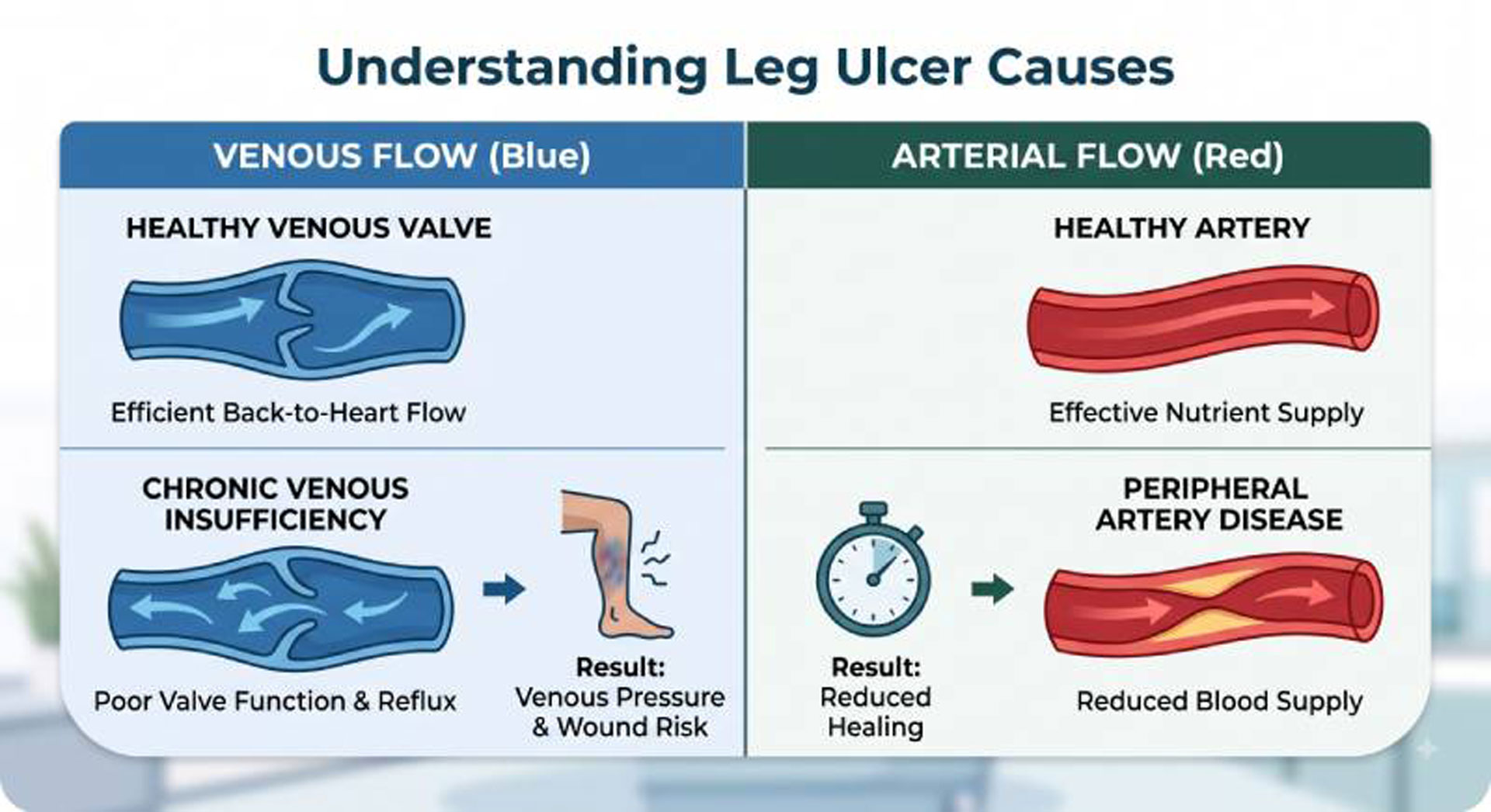
A venous ulcer is a slow-healing wound, usually on the lower leg or near the ankle, caused by poor vein circulation. It often develops after long-term venous pressure, swelling, skin changes, stasis dermatitis, or varicose veins. Treatment usually includes wound care, compression when safe, leg elevation, walking, and evaluation for venous reflux that may be keeping the wound from healing.
A venous ulcer is not just a skin sore. It often signals that blood isn't moving out of the leg as it should.
When vein valves fail, blood can pool in the lower leg. Pressure builds. The ankle can swell. Skin can turn brown, red, itchy, dry, or firm. Over time, a wound may open and struggle to heal.
At Vascular & Interventional Specialists of Alabama, venous disease care looks at the circulation problem behind varicose veins, swelling, skin changes, and venous ulcers.
What Is a Venous Ulcer?
A venous ulcer, also called a venous stasis ulcer, is an open wound caused by poor vein flow. It often appears between the knee and ankle, especially near the inside of the ankle.
NHS guidance describes venous leg ulcers as open, often painful sores that take more than two weeks to heal and usually develop on the inside of the leg between the knee and ankle.[1]
These wounds are linked with chronic venous insufficiency. In this condition, damaged leg veins struggle to move blood back to the heart. Cleveland Clinic notes that chronic venous insufficiency can cause swelling, skin changes, and ulcers.[4]
Early Skin Signs: Stasis Dermatitis and Varicose Eczema
Before a wound opens, the skin may warn you.
Stasis dermatitis, also called varicose eczema, can cause itching, scaling, dryness, redness, darkening, or irritation around the lower leg and ankle. Some people notice swelling at the end of the day. Others feel heaviness or aching.
Early-stage stasis dermatitis is easier to manage than an open ulcer. If your skin is changing near varicose veins or your ankles are swollen, don't wait for a wound to appear.
What Is Lipodermatosclerosis?
Lipodermatosclerosis is a firm, tight, painful change in the skin and tissue of the lower leg. The skin may look reddish-brown. The calf or ankle area can feel hard or narrow.
It is often linked with long-term venous pressure. It can make the skin more fragile and raise the risk of ulcers. If you notice thickening, hardening, or color changes around the ankle, you may need a vein evaluation.
Venous Ulcer vs Arterial Ulcer
Venous and arterial ulcers are different. Treating them the same way can be unsafe.
|
Feature |
Venous Ulcer |
Arterial Ulcer |
|
Main problem |
Poor vein return |
Poor artery blood supply |
|
Common location |
Lower leg, often near inside ankle |
Toes, feet, pressure points |
|
Leg signs |
Swelling, varicose veins, brown skin changes |
Cold foot, weak pulses, shiny skin |
|
Pain pattern |
Aching, heaviness, swelling |
Pain with elevation or walking |
|
Compression |
Often used if arteries are safe |
May be unsafe without testing |
NHS diagnosis guidance explains that a Doppler test may be used to check ankle artery pressure because compression is not safe if ankle artery pressures are low.[3]
Venous Ulcer Treatment
Venous ulcer treatment usually has more than one part. The wound needs care, but the vein pressure also needs attention.
Wound cleaning and dressings
A healthcare professional may clean the wound, remove dead tissue when needed, and apply a dressing. NHS treatment guidance says dressings are often changed one to three times per week, depending on the wound and care plan.[2]
Compression therapy when safe
Compression helps push blood upward and reduce swelling. NHS notes that compression bandages improve vein circulation and treat swelling, but applying them is a skilled procedure and should be done by trained staff.[2]
Compression should not be started blindly. If artery flow is poor, tight compression can be harmful.
Leg elevation and walking
Elevating the leg can reduce swelling. Walking helps the calf muscle pump blood upward. These steps do not replace wound care, but they can support healing.
Treating venous reflux
If venous reflux is feeding the ulcer, you may need vein treatment. Vascular & Interventional Specialists of Alabama lists endovenous laser ablation, radiofrequency ablation, sclerotherapy, foam sclerotherapy, and microphlebectomy among venous disease treatments.
Treating reflux can help lower pressure in the leg. That may support wound healing and reduce the chance of another ulcer.
When a Venous Ulcer Needs Prompt Care
Call a healthcare professional if you have an open sore that is not healing, worsening pain, drainage, odor, fever, red or swollen skin around the wound, or skin that turns black or blue.
You should also seek care quickly if you have diabetes, peripheral artery disease, immune problems, or a history of blood clots. These can make wounds more serious.
A Leg Wound May Be a Vein Problem, Not Just a Skin Problem
If you keep treating the skin but the wound keeps coming back, the source may be venous disease. A vein ultrasound can show whether reflux or blockage is adding pressure to the lower leg.
Vascular & Interventional Specialists of Alabama offers venous disease and varicose vein treatment as part of their minimally invasive vascular procedures in Birmingham and Pelham. Their Pelham office is also listed on Google Maps.
Frequently Asked Questions
- What causes a venous ulcer? - A venous ulcer is usually caused by long-term pressure from poor vein flow. Blood pools in the lower leg, swelling builds, and skin can break down.
- Is a venous stasis ulcer dangerous? - It can become serious if it is infected, painful, spreading, or not healing. A healthcare professional should evaluate it.
- What is the difference between stasis dermatitis and cellulitis? - Stasis dermatitis is chronic skin irritation from poor vein flow. Cellulitis is a skin infection. They can look similar, so check for new warmth, pain, fever, or spreading redness.
- How do you treat venous stasis ulcers? - Treatment often includes wound care, dressings, compression when safe, leg elevation, walking, and treatment of venous reflux if present.
- When should I search for a venous ulcer specialist near me? - Seek specialty care if a leg wound has not healed after two weeks, keeps coming back, is painful, drains, or appears with swelling, varicose veins, or skin color changes.
Conclusion
A venous ulcer often means the leg needs more than a bandage. The wound needs care, and the vein pressure behind it may also need treatment. If you have a slow-healing sore or skin changes near the ankle, request a consultation to discuss next steps.
Medical Disclaimer: This article is for general education only. It is not a diagnosis or treatment plan. Leg wounds can become infected and may need urgent care. If you have an open sore, worsening pain, fever, spreading redness, drainage, or diabetes, contact a healthcare professional promptly.
References
[1] NHS. Venous leg ulcer symptoms. https://www.nhs.uk/conditions/leg-ulcer/symptoms/
[2] NHS. Venous leg ulcer treatment. https://www.nhs.uk/conditions/leg-ulcer/treatment/
[3] NHS. Venous leg ulcer diagnosis. https://www.nhs.uk/conditions/leg-ulcer/diagnosis/
[4] Cleveland Clinic. Chronic Venous Insufficiency. https://my.clevelandclinic.org/health/diseases/16872-chronic-venous-insufficiency-cvi
[5] Vascular & Interventional Specialists of Alabama. Venous Disease. https://www.visofal.com/Specializations/Venous-Disease/