Those twisted, bulging veins on your legs are more than just a cosmetic frustration — they can be the visible sign of a progressive vascular condition. Varicose veins are incredibly common, affecting approximately 1 in 3 adults, yet many people put off seeking care because they believe surgery is the only option.
Understanding what varicose veins are, what causes them, and how they impact your health is the first step toward finding relief. Today, modern varicose veins treatment is highly effective and requires no surgery. The team at Vascular & Interventional Specialists of Alabama breaks down everything you need to know.
What Are Varicose Veins?
Varicose veins are swollen, twisted, rope-like veins that bulge visibly just beneath the surface of the skin. They most commonly appear in the legs, ankles, and feet, though they can develop elsewhere (for example, hemorrhoids are actually a type of varicose vein that forms in the rectum) [1].
To understand why they form, you have to look at how veins function. Your leg veins contain tiny, one-way valves that open to let blood flow upward toward the heart, and close to prevent it from flowing backward. When these vein walls weaken and the valves fail, blood flows backward and pools in the vein — a condition called venous reflux. This pooling blood increases pressure, causing the vein to stretch, swell, and bulge outward. They typically appear blue or purple and can be 3 millimeters or more in diameter.
Common Varicose Veins Symptoms
Varicose veins are not just a visual issue; they often come with a range of uncomfortable physical symptoms that worsen throughout the day. Common symptoms include:
- Bulging, rope-like veins: Twisted, blue or purple veins visible just under the skin.
- Leg heaviness and fatigue: Your leg muscles may feel tired, sluggish, and heavy, especially after prolonged standing.
- Aching or throbbing pain: Many patients experience varicose vein pain as a dull ache or throbbing sensation behind the knees or in the calves.
- Itching or burning skin: The skin directly over a varicose vein may itch intensely or feel warm.
- Ankle and leg swelling: Fluid builds up as blood pools in the lower legs, leading to swollen ankles by the end of the day.
- Skin discoloration and ulcers: In advanced cases, the skin near the ankle may darken, and open sores (venous ulcers) may develop.
What Causes Varicose Veins?
The root cause of varicose veins is venous reflux — the failure of the vein valves. But what causes the valves to fail in the first place? Several varicose vein risk factors contribute to weakened vein walls, including:
- Age: As we get older, veins naturally lose elasticity, and valves begin to wear out.
- Genetics: A family history of vein disease is one of the strongest predictors of whether you will develop them.
- Hormones: Pregnancy, birth control pills, and menopause all cause hormonal fluctuations that can relax and weaken vein walls.
- Prolonged standing or sitting: Jobs that require you to stay in one position for hours reduce circulation and increase venous pressure in the legs.
- Obesity: Excess body weight puts additional physical pressure on the leg veins.
- Tobacco use: Smoking damages the inner lining of blood vessels.
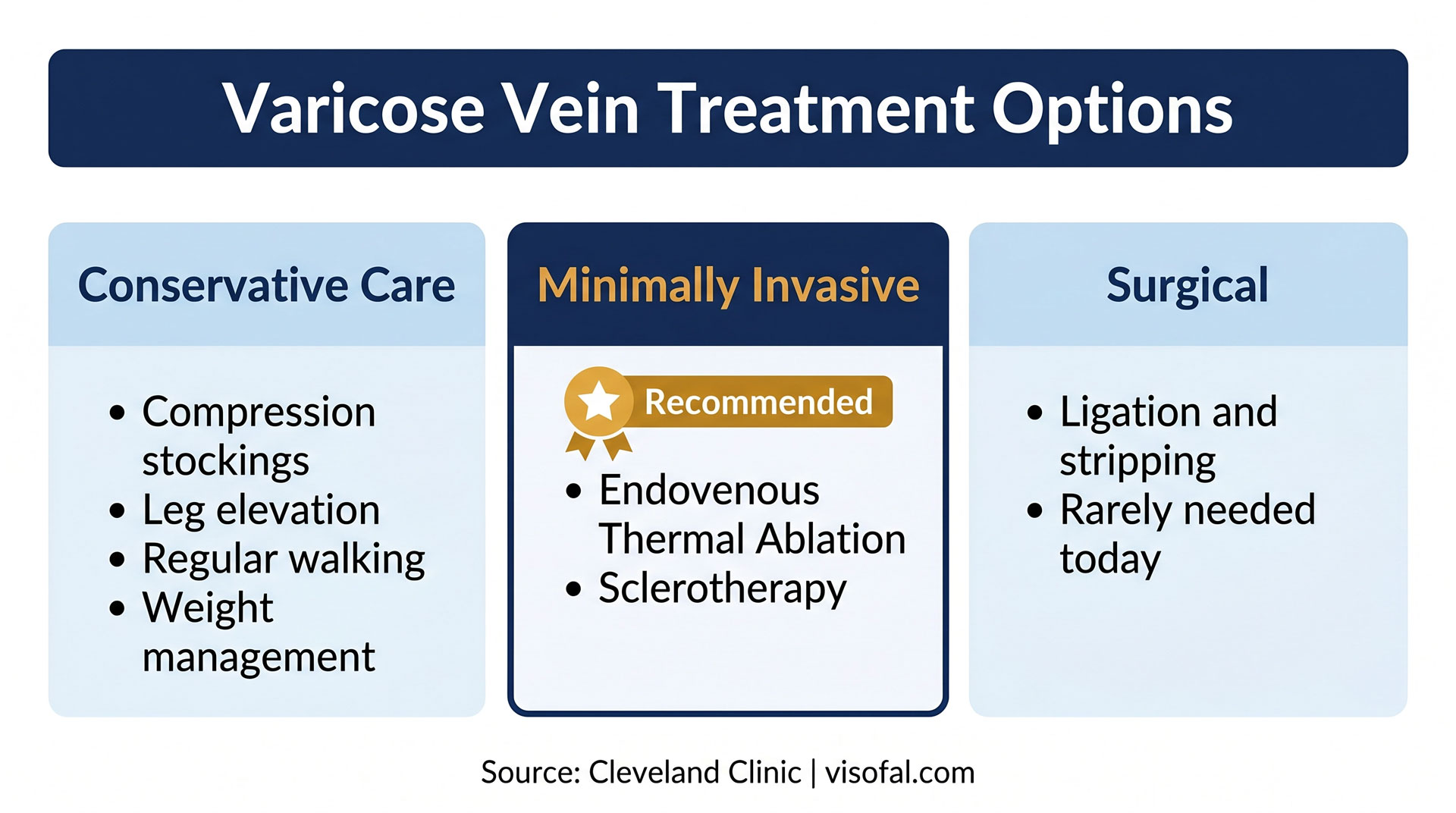
Varicose Veins Treatment Options
The good news is that medical technology has advanced significantly. To effectively treat venous disease today, doctors rely on a tiered approach, and most patients never need traditional surgery.
Conservative Care (First Step): Doctors usually recommend starting with conservative measures to manage symptoms. This includes wearing prescription compression stockings to support blood flow, elevating your legs above your heart throughout the day, walking regularly to activate the calf muscle pump, and maintaining a healthy weight.
Minimally Invasive Treatments: When conservative care isn't enough, minimally invasive procedures are the gold standard. Endovenous Thermal Ablation is a highly effective outpatient procedure where a specialist inserts a tiny catheter into the diseased vein and uses laser or radiofrequency energy to gently seal it shut. Blood is instantly rerouted to healthy veins. Sclerotherapy, which involves injecting a solution to close the vein, is also used for smaller varicose veins and spider veins.
Surgical Treatments: In the past, vein ligation and stripping (physically tying off and removing the vein) were the standard treatment. Today, thanks to minimally invasive options, this surgery is rarely needed and reserved only for the most severe cases [2].
Minimally Invasive Varicose Vein Care at VISA
At VISA, we specialize in Endovenous Thermal Ablation, offering patients the modern standard of care for vein treatment. This minimally invasive varicose vein treatment requires no surgery, general anesthesia, or hospital stay. Most patients walk out of the clinic and return to their normal daily activities the very same day.
Dr. Jeremy Ferris and Dr. Louis Lucas are highly credentialed interventional radiologists dedicated to providing the best varicose vein treatment in Pelham, AL.
Frequently Asked Questions (FAQs)
Are varicose veins dangerous?
For most people, varicose veins are not immediately dangerous, but they are a progressive condition. If left untreated, they can lead to serious complications, including dangerous blood clots (DVT), bleeding, venous ulcers, and chronic venous insufficiency.
Can varicose veins go away on their own?
No, varicose veins do not go away on their own. Conservative measures like compression stockings and exercise can slow their progression and ease symptoms, but only medical treatment can permanently close or remove the affected veins.
What is the best treatment for varicose veins?
Endovenous Thermal Ablation is currently the most effective and widely recommended minimally invasive treatment for varicose veins. It safely seals the damaged vein with targeted energy, delivering excellent results with minimal downtime.
Conclusion
Varicose veins are common, progressive, and very treatable. You do not have to live with heavy, painful legs or hide them under long pants. Seeking evaluation early, before complications like skin changes or blood clots develop, ensures the best possible outcome. To schedule a consultation at VISA, reach out to our team today, or find VISA on Google to learn more about our practice.
Medical Disclaimer: The information provided in this article is for educational and informational purposes only. It does not constitute medical advice. Always consult your physician or a qualified healthcare provider before making any medical decisions.
References
[1] Cleveland Clinic. (2024). Varicose Veins — Symptoms, Causes & Treatment. https://my.clevelandclinic.org/health/diseases/4722-varicose-veins
[2] NCBI PMC. (2019). Chronic Venous Insufficiency and Varicose Veins of the Lower Extremities. https://pmc.ncbi.nlm.nih.gov/articles/PMC6406103/